A car that gains energy while parked sounds like cheating, which is why Aptera keeps pulling curious drivers back into the conversation. The Aptera range claims deserve a calm look because the headline promise is not one promise. It is battery range, solar help, low weight, weather, parking habits, and production risk tied together in one unusual vehicle. Aptera’s current public page points to about 700 watts of integrated solar cells, up to 40 solar-powered miles per day, and 400 miles from a full charge, while also noting that the vehicle remains in testing and validation and that specifications can change.
That matters for U.S. shoppers because most drivers do not live inside a lab test. They sit in Phoenix sun, Chicago slush, Dallas traffic, Seattle drizzle, and apartment lots with no outlet. The solar EV range idea can make sense, but it is not magic. It works best when the car’s low energy use and daily mileage line up with your routine. For broader automotive technology coverage and deeper EV ownership planning, a practical electric vehicle buying checklist can help you separate a smart fit from a shiny distraction.
Why Aptera Range Claims Need a Different Kind of Test
The usual EV question is simple: how far can it go before you plug in? Aptera bends that question. Its whole pitch depends on needing less energy in the first place, then adding some energy back from the sun. That does not make the math fake. It means the math is fragile. A small change in speed, sun exposure, tire pressure, cabin heat, or parking angle can move the answer more than buyers expect. If Aptera succeeds, it will not be because drivers found a loophole in energy use. It will be because the vehicle wastes less energy before the solar cells ever help.
A light shape changes the math
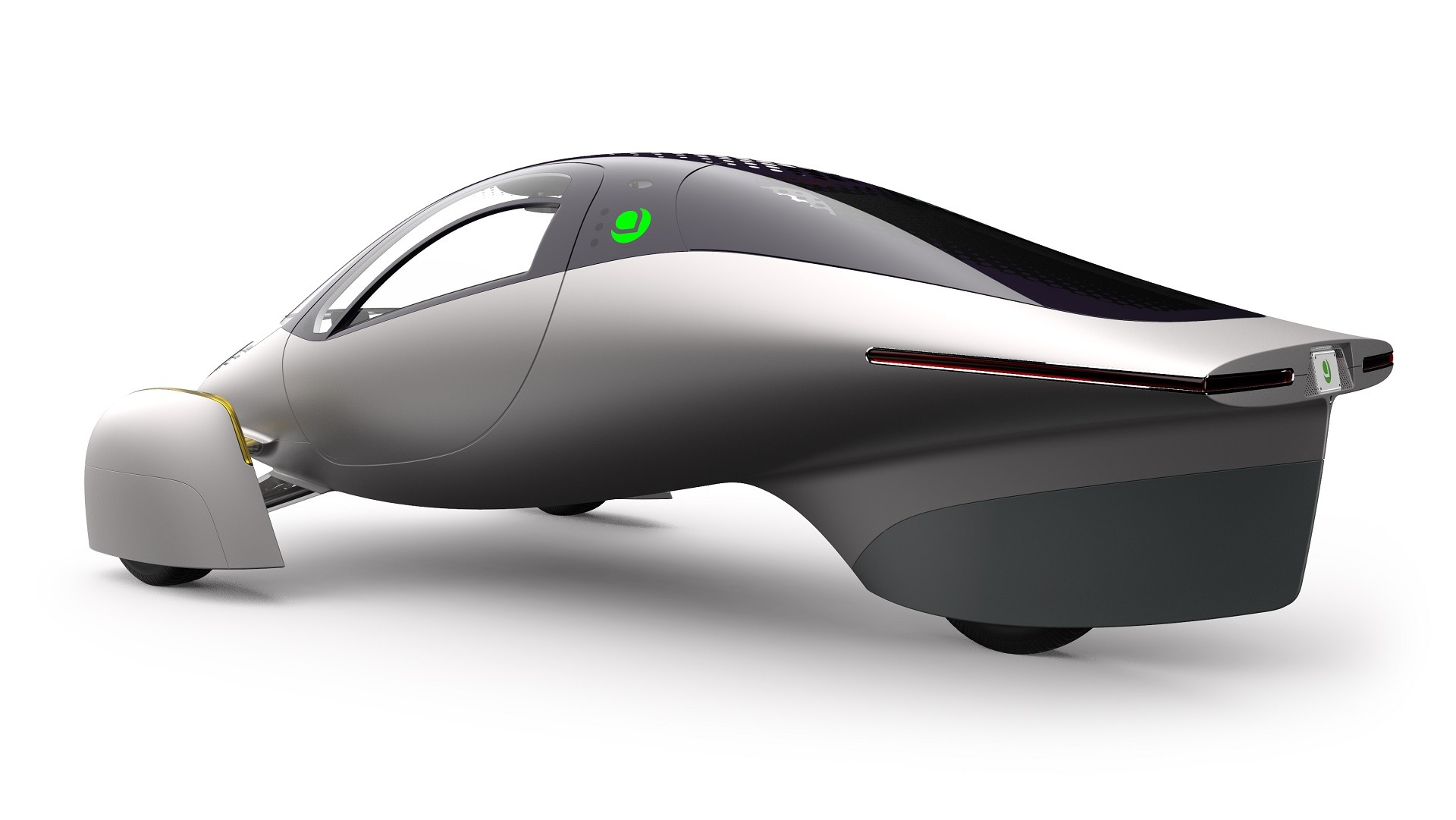
Aptera is not trying to beat a normal crossover at the normal crossover game. It is a two-seat, three-wheel vehicle with a narrow mission: move one or two people with as little drag and mass as possible. That is why a 400-mile battery figure can sit beside a pack size that would look modest in a heavier SUV. The vehicle is not winning by storing a mountain of energy. It is trying to sip from the cup.
This is the part skeptics sometimes miss. Real-world EV efficiency is not only a battery story. A blocky vehicle at highway speed spends a large share of its energy pushing air away. A smoother shell can turn the same battery energy into more distance, especially on steady roads. That is why the Aptera idea deserves more than a laugh, even if the final proof still belongs to owners, not launch pages.
The older public chatter around Aptera often centered on a future 1,000-mile version, while the near-term production talk has leaned on a 400-mile Launch Edition type of baseline. Green Car Reports described the 42-kWh Launch Edition plan as targeting an estimated 400 miles, while noting longer-range versions were planned later. That shift is not failure by itself. It is what happens when a dream car meets parts, money, testing, and production order. A patient buyer should judge the version offered for sale, not the wildest configuration discussed during the funding years.
The missing proof is owner data, not a prettier spec sheet
A claimed number can be honest and still fail to predict your week. EPA-style range, company estimates, and early validation drives all answer narrow questions. They do not answer whether a nurse in Minneapolis can finish night shifts in January without thinking about heat loss, or whether a retiree in Tucson can ignore a wall charger for half the year.
The best test for Aptera will be boring. Boring is good here. Owners need months of logs from normal commutes, grocery trips, weekend freeway runs, and cars parked under real sky. The solar EV range case becomes stronger when the same owner sees a pattern: fewer plug-ins, smaller overnight charging needs, and no drama when clouds show up for three days.
Aptera’s business stage also belongs in the feasibility discussion. In May 2026, the company said it had driven the first five validation vehicles off its low-volume validation assembly line in Carlsbad, had about 49,000 reservation holders as of March 31, 2026, and ended that quarter with $17.7 million in cash. That is progress, but it is not the same as thousands of customer cars living through heat, potholes, warranty visits, and insurance quotes.
Solar Charging Is Useful When the Car Lives Outside
Solar on a vehicle is easy to oversell because the sun feels free. The better way to think about it is not “free fuel forever.” Think of it as a slow refill that works while you are doing something else. That can be useful. It can also be close to useless if the car sleeps in a garage, parks under trees, or spends weekdays in a shaded office deck. Solar is a location feature as much as a vehicle feature. The same hardware can feel generous in one ZIP code and modest in another.
Why 40 daily miles is a ceiling
Aptera says its integrated solar package is designed to add up to 40 miles of driving per day and may supply more than 10,000 miles per year under favorable conditions. The phrase “up to” carries a heavy load. In San Diego, a sun-exposed parking spot in June gives the car a fair shot. In Portland during a wet winter week, the same panel area faces a different world.
The non-obvious point is that the miles matter more than the watts. Aptera’s roughly 700-watt solar array sounds small beside a house roof, but the vehicle is built to need less energy per mile. If the car truly uses far less power than a typical EV, each solar watt buys more distance. That is the key bet behind solar charging miles: low demand makes a small supply feel larger.
Still, a ceiling is not an average. Dust, low winter sun, snow cover, panel heat, shadows from roof racks on nearby trucks, and the angle of the car can all trim solar intake. A driver who parks nose-in beside a tall wall may get a different result than a driver parked in an open workplace lot. Solar rewards placement. It does not care about the brochure. Even a thin film of road grime can matter because vehicle panels sit low, face splash, and cannot be tilted toward the midday sun like a roof array.
A garage can be worse than a cloudy day
The oddest Aptera ownership issue may be that a “good” parking habit can reduce the car’s best party trick. Many Americans protect their vehicles in garages to avoid hail, theft, sun damage, and winter frost. That helps paint and comfort. For Aptera, indoor parking also blocks the feature that makes the vehicle feel special.
That tradeoff could create a split between owners. A suburban driver with a sunny driveway in Arizona may see solar charging miles pile up while the car sits at home. A condo owner in Boston with an underground space may own the same vehicle but rely almost entirely on plug-in charging. Same car. Different outcome.
This is where a home energy plan still matters. A sunny car can reduce plug-ins, but it should not replace a basic charging plan for most buyers. A 120-volt outlet may cover light use. A Level 2 setup may make sense for longer commutes or cold regions. A clear home charging setup guide can help buyers decide whether Aptera’s solar assist is a bonus or the backbone of daily use.
U.S. Roads Will Expose the Gap Between Test Range and Life
American driving is not one thing. A driver in Los Angeles may creep through warm traffic. A driver in Wyoming may run 75 mph against crosswinds. A Michigan owner may lose energy to cabin heat before leaving the driveway. This is where the feasibility question gets serious. Aptera’s shape helps, but no shape cancels physics, climate, and human habits. The smartest buyer will not ask for one perfect number. They will ask how wide the swing is between a good day, a bad day, and the day they forgot to plan.
Weather taxes the battery before the trip starts
Cold weather is the first hard test. The U.S. Department of Energy winter EV guidance advises owners that covered parking can help in freezing conditions because EVs tend to perform better when protected from deep cold, and it also recommends winter habits such as managing outdoor charging and cabin heat. Those tips are not Aptera-specific. They apply because batteries and comfort systems have limits.
This is where real-world EV efficiency gets less romantic. A sleek vehicle still needs to warm a cabin, manage a battery, clear fogged glass, and roll on cold tires. A Wisconsin driver who leaves the car outside overnight may see less distance than a California driver on the same route length. Solar input is also weaker during short winter days, which hits Aptera from both ends.
The mild surprise is that winter may hurt the solar story more than the battery story for some owners. A plug can refill a pack. Snow on the body can block solar cells until it is removed. A shaded work lot in December may add little during the exact season when the cabin needs more energy. In that setting, Aptera becomes a high-efficiency plug-in EV first and a solar-aided vehicle second.
Highway speed is where the teardrop earns or loses trust
Aptera’s body shape should help most at speed, where air resistance punishes blunt vehicles. That gives the design a real chance on U.S. highways. A long, steady freeway run from San Diego to Las Vegas is the kind of trip where low drag could shine, provided crosswinds, grade, tire choice, payload, and speed stay friendly.
Yet highways also expose overconfidence. Drivers do not hold a perfect speed forever. They pass trucks, climb grades, run climate control, and carry bags. A vehicle that feels efficient at 55 mph can look different at 75 mph. Aptera’s real test is not whether it can post a great figure under careful use. It is whether a normal owner can be a little careless and still trust the trip plan.
That makes charging network access part of the range discussion. A car with strong efficiency still needs dependable backup on travel days. It also needs route planners to treat wind, hills, and heater use as normal inputs, not rare surprises. Aptera has promoted NACS compatibility, which points toward the plug standard used across much of the North American fast-charging landscape. The buyer question is simpler than the standard: where can you stop, how fast can you add miles, and will the vehicle’s final charging curve match your patience?
The Buyer Question Is Less About Magic and More About Fit
A solar car sounds like a mass-market answer, but Aptera is more likely to start as a fit-based answer. It fits a narrow owner profile first, then maybe widens as the product matures. That is not an insult. Plenty of smart vehicles begin with a tight use case. Trouble starts when buyers expect one machine to cover every household job. A product can be limited and still be useful. The danger is pretending the limits are small when they shape the whole ownership story.
Who may get the best ownership case
The best Aptera owner is not hard to picture. They drive alone most days. Their round trip is under 40 miles. They live in a sunny region or park outside at work. They have another option for hauling kids, lumber, dogs, or visiting relatives. They like efficiency enough to accept an unusual shape, a two-seat cabin, and the attention that comes with both.
For that person, solar charging miles could change the feel of ownership. The car might sit Monday through Friday and regain enough energy to soften or erase routine charging. A remote worker in inland Southern California who drives to the gym, the grocery store, and a few local errands could have weeks where the plug barely matters. That is the dream version, and it is not silly.
The counterintuitive part is that low-mileage drivers may benefit more than road warriors. Long-distance drivers burn through the solar gain fast. Short-trip drivers let the car recover while parked. In that pattern, the slow refill has time to matter. Solar is not a road-trip fuel pump. It is a patient daily helper.
What should make a cautious buyer pause
The biggest pause is not the science. It is execution. Aptera has enthusiasm, reservations, validation vehicles, and a bold design. It also has to prove manufacturing, service access, crash confidence, parts supply, warranty handling, and resale demand. A buyer does not live with a spec sheet. A buyer lives with the company behind it. One delayed part, one distant service center, or one confused insurer can make an efficient car feel harder to own than a less efficient mainstream EV.
Regulatory identity deserves attention too. Three-wheeled vehicles have long sat in a different U.S. rule bucket than four-wheel passenger cars; NHTSA materials have treated three-wheeled motor vehicles as motorcycles under existing federal definitions, even while policy debates have considered car-like three-wheelers. That does not make Aptera unsafe by default, but it does mean buyers should read final safety, registration, helmet, licensing, and insurance details for their state before paying.
The safer stance is neither hype nor dismissal. Ask how you drive, where you park, what winter looks like, and how much risk you will accept from a young automaker. A retired couple in Nevada and a rideshare driver in New Jersey are not shopping for the same outcome. Aptera may be brilliant for one and wrong for the other.
Conclusion
Aptera is easiest to misunderstand when it is judged like a normal EV wearing strange bodywork. The better reading is that the vehicle is an efficiency experiment aimed at daily American driving, not a promise that sunlight can replace every charger. Its best case depends on low energy use, open-sky parking, mild weather, and a buyer who values fewer plug-ins more than familiar vehicle habits.
The range claims are believable enough to take seriously and unproven enough to test hard. That middle ground is where smart shoppers should stand. Watch for customer deliveries, independent range tests, winter reports, insurance data, and service stories before treating the numbers as settled. Pay special attention to tests run by ordinary drivers who publish weather, speed, parking, and charging notes. Aptera’s solar idea may become a useful answer for some drivers, especially those with short commutes and sunny parking. It may also remain a niche machine with a loyal crowd. Neither outcome would be shocking, because the concept is strong only when the owner’s life gives it room to work.
Use the excitement, but do not let it drive. Put your own route, climate, parking spot, and backup charging plan on paper before you reserve anything.
Frequently Asked Questions
How much solar driving can Aptera add in a normal day?
The best public figure is up to 40 miles per day, but that is a high-end condition, not a daily guarantee. Sun angle, clouds, shade, dust, parking direction, season, and local climate can all cut the number. Sunny outdoor parking gives the car its best chance.
Is Aptera a good EV for apartment renters?
It can work for renters who park outdoors in good sun and drive short daily routes. It is a weaker fit for renters stuck in covered garages or shaded lots with no outlet. The solar feature helps most when the car sits under open sky for hours.
Can Aptera replace home charging completely?
Some drivers may plug in far less, but most should still plan for charging. Weather, trips, cloudy weeks, and higher speeds can drain more energy than solar adds. Treat solar as a daily assist first, then see whether your routine allows more.
Why does Aptera claim strong distance from a smaller battery?
The design aims to cut energy demand through low drag, low weight, and a narrow two-seat layout. A vehicle that needs less energy per mile can travel farther on the same battery energy. The idea is sound, but independent owner data matters.
Is Aptera practical for cold U.S. states?
It may be practical for some cold-state drivers, but winter will reduce the best-case solar and battery story. Cabin heat, cold tires, snow cover, shorter days, and outdoor charging all matter. A garage helps the battery, yet blocks solar gain while parked.
Is Aptera safe because it looks like a car?
Appearance is not enough. Buyers should review final crash information, state registration rules, insurance treatment, and federal classification details. Three-wheel vehicles can fall under different rules than four-wheel cars, so the paperwork matters as much as the design.
Who is the best match for an Aptera?
The strongest match is a driver with short solo trips, sunny outdoor parking, a backup charging option, and another vehicle for cargo or family duty. People who enjoy efficient machines and accept a strange shape will likely be happier than buyers wanting a normal crossover.
Should buyers wait for independent Aptera tests?
Yes, cautious buyers should wait for third-party road tests, owner logs, cold-weather reports, and service experiences. Early company figures are useful, but they cannot show repair speed, insurance cost, long-term solar output, or how the car behaves across U.S. climates.