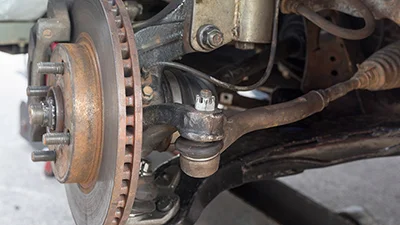
A front tire can tell the truth before the steering wheel admits anything is wrong. The phrase steering knuckle symptoms usually points to more than a noisy corner or a car that needs another alignment. The knuckle is the solid casting or forging that holds the wheel hub, bearing, brake mount, and steering connection in their proper relationship, so small damage can move the tire out of its intended path. ZF describes the knuckle as the part that helps hold the suspension, steering, axle, brakes, and wheel hub assembly together. That is why a worn or bent one can chew up tires, make the car drift, or leave a technician chasing settings that will not stay put. For drivers comparing repair choices, practical automotive repair coverage can help connect the symptom with the kind of decision a local American shop faces every day. The short answer is simple: if alignment readings look odd after a pothole, curb hit, rust damage, or bearing failure, the knuckle belongs on the suspect list.
Why the Knuckle Matters More Than It Looks
The steering knuckle does not attract attention because it rarely fails in a dramatic way. It sits behind the wheel, covered in brake dust, road salt, and old grease, doing quiet work. Yet it decides where the hub sits, where the brake caliper grips, and how the tire meets the road.
The hidden hinge behind steering, braking, and ride height
Think of the knuckle as the corner office for the front wheel. The ball joint, tie rod, strut, hub, bearing, and brake bracket all report to it. If that office moves even a little, the whole corner starts making bad decisions.
On many U.S. cars, a MacPherson strut bolts straight to the knuckle. On trucks and older SUVs, upper and lower ball joints may hold it between control arms. Either way, the shape of the knuckle sets the working angle for the tire. The alignment rack can adjust toe, camber, or caster only within the range the vehicle was built to allow. A bent ear, stretched bore, wallowed ball-joint taper, or rust-swollen mounting face can put the corner outside that range.
This is the part many drivers miss. A shop can set the toe numbers green on the screen and still send you away with a car that scrubs the inside edge of a tire. The machine reports the settings it can see. It does not always explain why one side needed an odd amount of correction to reach them.
Why tire wear can appear before the driver feels danger
A worn knuckle often shows up as uneven tire wear before it feels scary from the driver’s seat. That seems backwards. Most people expect a bad steering part to shake, bang, or wander right away.
Tires are less forgiving than your hands. A tiny camber change can place extra load on one shoulder of the tread for thousands of revolutions on a freeway trip. A small toe error can drag the tread sideways with every turn of the wheel. The steering wheel may still feel centered because the other side is helping cover the fault.
NHTSA tells drivers to rotate tires every 5,000 to 8,000 miles when the vehicle maker recommends it, or sooner if uneven wear appears. That advice matters here because irregular wear is often the first clue that something mechanical has shifted, not proof that the tire itself was poor. A commuter in Ohio who hits the same cratered freeway ramp every morning may not notice the slow change. The tire shoulder notices.
The non-obvious part is that the knuckle may not be “worn out” like a bushing. It may be distorted, corroded, or damaged at a mounting point. That difference matters because no amount of tire rotation or routine wheel alignment problems correction can put a damaged metal reference point back where it belongs.
Steering Knuckle Symptoms That Point Beyond a Simple Alignment
A bad alignment is common. A damaged knuckle is less common, but it is costlier to miss. The trick is to watch for symptoms that return after normal service, appear after an impact, or affect one corner more than the rest of the car.
Pulling, off-center steering, and a wheel that will not sit square
A steady pull to one side is the classic complaint, but it is also one of the easiest symptoms to misread. Tire pressure, road crown, brake drag, and worn control arm bushings can all make a car drift. A knuckle enters the conversation when the pull comes with strange alignment readings or a tire that looks tucked in, leaned out, or set back compared with the opposite side.
A driver in Dallas might clip a curb while avoiding a pickup in a tight parking lot. Nothing breaks. The wheel still turns. A week later, the car needs the steering wheel held a few degrees left on the highway. The right front tire begins wearing on one edge. That pattern can come from a bent strut, a shifted cradle, or wheel alignment problems, but the knuckle is one of the parts that can bend while leaving the rest looking fine.
One practical clue is repeat failure. If the same corner returns out of spec after an alignment, and the tire pressure, wheels, struts, and control arms check out, the knuckle should not be treated as a last-minute guess. It should be measured. Guessing burns money.
Clunks, rotor rub, and vibration after impact
Noise from a damaged knuckle is not always a clean “clunk.” It can be a scrape at low speed, a groan on turns, a pulsing brake feel, or a vibration that arrived after a pothole strike. The sound depends on what moved. A caliper bracket may no longer sit square to the rotor. A hub bore may not support the bearing as evenly as it should. A tie-rod arm may point the wheel through a slightly wrong arc.
This is where the brake system can give the secret away. If a rotor starts rubbing after suspension impact, many people blame a bent dust shield. Sometimes that is true. But if the shield is clear and the caliper sits odd, the knuckle needs a close look. A bent mounting boss can create a problem that feels like brake trouble while starting in the steering corner.
Mevotech notes that knuckle damage can show up as pulling, squealing while turning, steering wheel shake, or failure of the wheel to return to center. Those are broad signs, so they should not be used alone. Paired with fresh impact history, one-sided tire wear, or strange alignment data, they become much harder to ignore.
The counterintuitive detail: the car may drive better at speed than it does in a parking lot. At highway speed, tire forces can mask a minor geometry error. At low speed, the tire has to scrub across pavement, and the wrong pivot angle can speak through the wheel.
Separating Knuckle Damage From Ball Joint, Bearing, and Strut Problems
The steering knuckle sits in a crowded neighborhood. When something feels loose at one front corner, several parts can seem guilty. A careful shop does not jump straight to the most expensive part. It tests the neighbors first, then checks the metal body that holds them.
What a shop should measure before selling parts
The first inspection should be physical, not digital. The tire comes off. The wheel is checked for bends. The bearing is checked for play and roughness. The ball joint and tie rod are tested under load, not tugged once in the air and declared good. The strut bolts and control arm mounts need marks, witness lines, and comparison from side to side.
Then the alignment data matters. A bent knuckle often leaves a fingerprint in camber or steering axis inclination, especially when one side is different from the other after an impact. A trained technician may compare the suspect corner to the opposite side, not only to a broad factory range. Some repair information and shop articles discuss using alignment angle data to detect a bent knuckle when visual clues are limited.
The best question to ask the shop is not, “Is the alignment bad?” Ask, “Which angle cannot be corrected, and what part fixes that angle?” That turns the conversation from sales into diagnosis. It also helps you avoid replacing a knuckle when the real problem is a slipped subframe or a bent lower control arm.
Why pothole damage can hide under normal-looking hardware
Pothole damage has a nasty habit of looking harmless. The wheel may hold air. The tire may not bulge. The car may not pull hard enough to scare you. A month later, the inner tread is feathered and the steering wheel is no longer straight.
Aluminum knuckles can be tricky because they may not show the same obvious bending or flaking as old stamped parts. Cast iron and steel units can hide stress around bolt holes, bearing seats, or tapered holes. Rust-belt vehicles add another layer. In states such as Michigan, New York, Pennsylvania, and Wisconsin, salt can make the surface look worse than the structure. Or it can do the opposite and eat away at a mounting area that looked acceptable during a fast brake job.
Federal commercial-vehicle inspection material treats cracks and repair-welded front axle or steering components as serious defects. Passenger cars are not inspected under the same rule set, but the principle is still useful: cracked steering metal is not a part to “watch for a while.” A crack near a ball-joint boss or strut ear changes the conversation from tire wear to control of the wheel.
The non-obvious insight is that a new tire can hide the problem for a short time. Fresh tread has enough rubber to absorb scrub without showing it right away. By the time the pattern appears, the driver may blame the tire brand, the alignment shop, or the road. The damaged reference point was there the whole time.
Repair Choices, Cost Logic, and When Replacement Is Safer
A steering knuckle is not a part most owners want to buy. It can be expensive, and the labor can stack up because the hub, bearing, axle nut, brake hardware, and ball joint connections may all be involved. Still, the wrong repair can cost more than the right one.
When steering knuckle replacement makes more sense than adjustment
Steering knuckle replacement makes sense when the part is cracked, bent, corroded at a loaded mount, damaged at the bearing bore, or unable to hold the connected parts in the correct position. It also makes sense when alignment readings and comparison measurements point to the knuckle after easier suspects have been ruled out.
There are gray areas. Surface rust alone does not always mean the part is unsafe. A cosmetic casting mark is not a crack. A seized wheel bearing can make removal ugly, but that does not prove the knuckle is bad. This is why diagnosis beats fear. A good shop will show you the failed mount, the measurement, the crack, or the angle that will not correct.
Some preassembled parts combine the knuckle, hub, bearing, backing plate, studs, and axle nut. MOOG describes these assemblies as a way to reduce bearing service complexity and installation time on certain applications. That can be useful on older daily drivers where pressing a bearing into a rusty knuckle might damage the part anyway. It is not always the cheapest part on the invoice, but it may be cheaper than paying twice for labor.
A second steering knuckle replacement is rare when the first diagnosis is sound. The repeat cases often come from skipping the related checks: bent wheel, bad strut, stretched lower control arm, or subframe shift. Metal does not care how neat the invoice looks.
How to protect new tires after the repair
The repair is not done when the knuckle is bolted on. The tire, wheel, bearing, brakes, and alignment all need a final truth check. A new knuckle installed against a dirty mounting face can still cause trouble. A reused bearing that was damaged during removal can create noise. A wheel that took the same curb hit can add vibration even after the steering corner is fixed.
The order matters. Inspect the wheel and tire first. Replace damaged suspension or steering parts next. Torque the hardware with the suspension loaded when the service manual calls for it. Then align the car. After that, recheck tire wear across the tread over the next few weeks. That is how you catch small problems before they eat a new set.
For owners, the smartest move is to save the before-and-after alignment printout. It should show what changed, not simply that the final boxes turned green. Pair that with a tread-depth check at each rotation. NHTSA’s tire safety page is worth bookmarking because it ties tire care to wear, pressure, and safe driving habits in plain terms.
The surprise is that the cheapest repair can be the one that feels expensive at first. If a damaged knuckle is ruining a $900 set of tires, making the car pull, and forcing repeat alignments, waiting is not saving money. It is moving the bill into smaller, more annoying pieces. For a deeper next step, connect this topic with a front suspension noise diagnosis and an uneven tire wear troubleshooting guide before buying parts.
Conclusion
Steering problems rarely come with one clean answer. A pull, a clunk, a rub, or a tire edge worn thin can begin with a simple alignment issue, a tired ball joint, or a bent wheel. The steering knuckle deserves attention because it sits at the center of those possibilities.
The best response to steering knuckle symptoms is not panic. It is a careful check after impact, repeat alignment trouble, or one-sided tread damage. Ask for measurements. Ask what angle will not correct. Ask the shop to compare the suspect corner with the other side. That small bit of pressure often separates parts guessing from repair thinking.
For American drivers dealing with rough city streets, winter salt, construction zones, and curb-heavy parking lots, this part should not be ignored because it looks like plain metal. Plain metal can decide whether your tire rolls straight or fights the road every mile. Catch the fault early, fix the geometry, and protect the tires before the car teaches the lesson through your wallet.
Frequently Asked Questions
How do I know if a front knuckle is bad or the car only needs alignment?
Repeat alignment failure is the strongest clue. If the same wheel keeps falling out of spec, or one tire keeps wearing oddly after normal service, the shop should inspect the knuckle, strut, control arm, wheel, and subframe before selling another alignment.
Can a bent knuckle cause uneven tire wear?
Yes. A bend or damaged mounting point can change camber, toe behavior, or the hub position. That can make one tire edge wear faster than the rest, even if the steering wheel still feels almost normal during daily driving.
Is it safe to drive with a damaged front knuckle?
Small geometry damage may feel drivable, but cracks, broken mounts, severe corrosion, or wheel movement are unsafe. Have the car inspected before highway use if the issue followed a curb hit, crash, pothole strike, or bearing failure.
What does knuckle damage feel like while driving?
Common feelings include a pull to one side, off-center steering, vibration, clunking, scraping, or a wheel that feels strange when turning at low speed. The signs can overlap with bearing, brake, strut, and ball-joint faults.
Can a shop see a bent knuckle without removing it?
Sometimes. A clear bend, crack, rust damage, or shifted brake mount may be visible. More often, the shop needs alignment readings, side-to-side comparison, wheel checks, and loaded suspension inspection to prove the part is the cause.
Should I replace the hub bearing with the knuckle?
It depends on the design and condition. If the bearing is pressed in, noisy, loose, rusty, or damaged during removal, replacement is often smart. Some vehicles offer preassembled units that include the knuckle, hub, bearing, and related hardware.
How much does this repair usually cost in the United States?
The total can vary widely by vehicle, rust level, labor rate, and whether the hub or bearing is included. A compact car may be far cheaper than a late-model SUV or truck. Always ask whether alignment is included after installation.
Will new tires fix the problem for a while?
New tires may hide the wear pattern for a short period, but they will not correct the geometry. If the knuckle or another suspension part is damaged, the same wear can return and ruin the new tread.