A car with a weak ground does not always act broken in a neat, tidy way. One morning it cranks slowly. The next day the dash lights flicker, the radio resets, and the scan tool shows codes that point in three directions at once. That is why ground strap symptoms deserve a place near the top of your first-check list, not at the end after you have bought a battery, alternator, starter, and two sensors. For American drivers, the problem shows up often on older daily drivers, trucks, winter-state cars, and vehicles that have seen engine work. Road salt, heat, oil mist, loose bolts, and vibration all work on the same small strap. When that return path gets dirty or weak, car electrical problems stop making sense. A practical diagnostic mindset, the kind often covered in automotive repair resources, starts with the cheapest shared cause before chasing the most dramatic part. The point is not to blame every odd warning light on a ground. The point is to prove the ground can carry current before trusting the rest of the system.
Ground Strap Symptoms That Look Like Bigger Failures
The first trap is emotional. A no-start feels like a dead starter. A battery warning light feels like an alternator. A cluster full of lamps feels like a computer problem. Yet the ground strap sits between all of those stories. It gives current a clean way back to the battery. When that path gets restricted, several systems complain at the same time, and each one seems to accuse a different part. That is why a weak strap often survives the first round of repairs. It does not look expensive enough to be guilty. It also does not fit the way most people think car failures work, where one bad part creates one clear complaint. Modern cars share grounds across sensors, modules, lighting, and charging paths, so one weak connection can imitate a pileup of unrelated defects. That shared-path idea is the whole key.
Why a bad engine ground fools the scan tool
A scan tool reports what modules see. It does not always know why they see it. A weak ground can make sensor voltage appear higher or lower than expected, then the computer reacts as if a sensor lied. That is how a bad engine ground can create codes for throttle position, crank sensors, oxygen sensors, ABS, or transmission behavior when the shared return path is the real offender.
This is where many owners spend money in the wrong order. A driver in Ohio might replace a battery after slow cranking in January. A week later the headlights still dim when the rear defroster comes on. Then a parts-store scan points at a body control module. The failure feels bigger because it is scattered. The strap is boring, but the damage it causes is noisy.
The non-obvious part is that the engine may run well enough to hide the fault. A corroded strap can pass light current and fail under load. At idle, the car may seem normal. When the starter pulls hard, the radiator fan kicks on, or the headlights and blower motor run together, the weak path shows itself.
The signs that appear under load, not at idle
Load is the truth test. Watch what happens when you turn on headlights, rear defrost, blower speed, heated seats, or wipers. If the dash dims, gauges twitch, the radio cuts out, or warning lamps blink for no clear reason, you may be dealing with a return-path issue instead of separate failures.
Slow cranking is the classic clue, but it is not the only one. You may hear a single click, a rough crank, or a starter that sounds tired even after the battery tests strong. On some vehicles, the engine block is grounded to the body through a braided strap. If that strap is corroded, starter current may try to return through throttle cables, shift cables, or smaller body grounds. That is a bad bargain.
This is why starter motor troubleshooting checklist should include ground testing before replacement. The starter can only work with the voltage and current it receives. A new starter bolted to a poorly grounded engine can act like the old one, which is a painful way to learn that shiny parts do not fix a dirty path.
How Corrosion Turns One Strap Into Several False Failures
Corrosion rarely announces itself with a clean label. It creeps under insulation, hides under mounting bolts, and forms between two metal surfaces that still look connected from the outside. On many cars, the strap sits low near heat, splash, battery acid vapor, or salted winter slush. It is not living a gentle life. The engine also moves on its mounts while the body stays still, so the strap flexes each time the car starts, shifts, or hits a rough road. That motion matters. A half-broken braid can open and close like a bad door latch, which makes the complaint come and go. That intermittent nature is why the car may pass a quick shop check at lunch and fail again on the drive home. The fault waits for vibration, heat, or load.
Why clean-looking cables can still test poorly
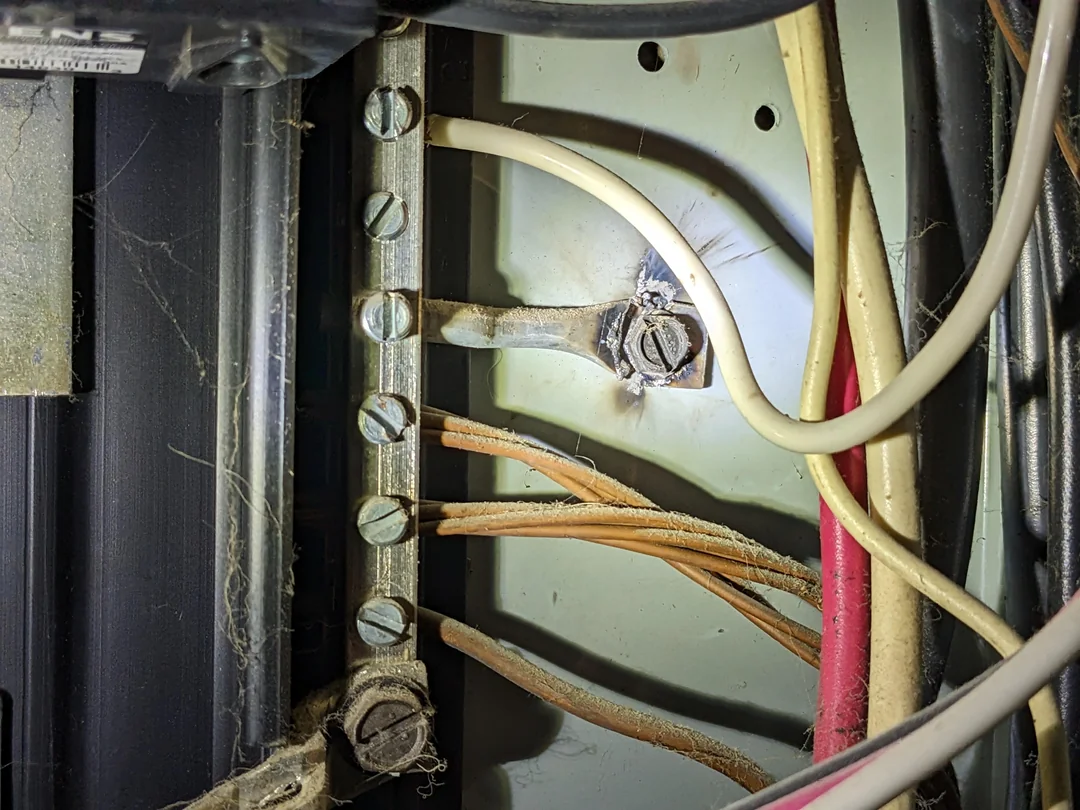
A ground strap does not need to be broken in half to cause trouble. One loose bolt, green crust inside a braided cable, paint under a mounting eyelet, or rust between the strap and body can add enough resistance to make modules misbehave. You can tug the cable and see no problem. You can look at it in daylight and feel safe. That visual check misses the point.
Electricity cares about contact quality, not appearances. The eyelet may touch the body, but the actual metal-to-metal contact can be tiny. Heat makes it worse. Vibration makes it move. Moisture gives corrosion a place to spread. A battery ground cable can look decent near the battery post while the engine-side connection is ugly, loose, or hidden under grime.
A useful habit is to inspect both ends, not the part you can see first. Remove the fastener when safe, check the mounting pad, look for broken braid strands, and inspect for stiff or swollen insulation. A strap that feels crunchy when bent has already told you enough.
Why winter states see the problem sooner
Cars in Michigan, New York, Pennsylvania, Wisconsin, and northern Illinois often age from the underside up. Salt spray collects on subframes, brackets, splash shields, and lower engine hardware. A small ground point near the transmission or frame rail may get soaked for years before a driver notices anything strange.
Here is the counterintuitive piece: low-mileage cars can suffer too. A ten-year-old sedan with 58,000 miles in Minnesota may have worse ground contact than a higher-mileage Texas car. Time, salt, and moisture do not care that the odometer looks friendly. Weekend cars can also corrode while sitting, since moisture remains trapped around fasteners.
Heat-baked cars have their own version. In Arizona or Nevada, a strap near the exhaust can become brittle. The eyelets may loosen from expansion cycles, and old insulation may crack. Different climate, same ending. The return path loses quality, and car electrical problems begin to look random.
Testing the Ground Side Before You Buy Parts
Diagnosis should start where several symptoms meet. If the battery tests good, the terminals are tight, and the vehicle still behaves oddly, the ground side deserves proof. Guessing is expensive. Testing is not. This is also where many free parking-lot checks fall short. A battery tester may say the battery is fine, yet it does not prove the engine, body, and module grounds can carry current under the same load your car sees on a cold morning. The ground side has to be tested while it is working. A parking-lot scan has value, but it cannot feel the starter draw or the blower motor load through the strap. The meter has to catch the circuit in the act. When the complaint happens only on cold starts or rainy nights, repeat the test under those conditions before blaming the most expensive box in the circuit.
A voltage-drop check tells the truth
A voltage-drop test checks how much electrical pressure is being lost across a cable, connection, or ground while current is flowing. That last part matters. A resistance check on a parked car can pass because almost no current is moving. The strap may fail only when the starter, fan, lights, or blower motor asks for work.
The method is direct. Put a digital multimeter between the negative battery post and the engine block, then crank the engine with fuel or ignition disabled when that is safe for the vehicle. A small reading is expected. A higher reading means the ground path is restricting current. Fluke’s voltage drop testing basics explain why ground-side restrictions can cause dim lights, slow motors, erratic devices, false codes, and poor component performance.
Do the same idea from the negative post to the body ground while electrical loads are on. Headlights, blower, rear defrost, and brake lights can expose a weak body ground that looks fine with the car asleep. A weak ground is not always a no-start problem. Sometimes it is a “turn signals quit when I brake” problem.
A good test also keeps you honest about parts. If the voltage loss is high before the repair and low after cleaning or replacement, you have proof. If the reading stays high, the trouble may be at another ground point, a damaged cable, or a loose connection between the battery and body.
When a jumper cable becomes a quick clue
A jumper cable can act as a temporary test path. Clamp one end to the negative battery post and the other to clean metal on the engine block. If the cranking speed changes, the dash wakes up, or the strange behavior calms down, you have a clue worth following. It is not a final repair. It is a shortcut to the right neighborhood.
This trick helps when the strap is buried. Many transverse engines hide ground points under the intake, near the transmission case, or behind splash shields. A temporary ground path lets you separate a weak return path from a weak starter or battery. Use care around belts, fans, and exhaust parts. Never let the cable touch the positive post or a live terminal.
Pair this check with battery drain diagnosis guide when the complaint is a repeated dead battery. A bad ground does not create every drain, but it can confuse charging behavior and make test results messy. Clean ground data gives you a fair shot at finding the next fault, if there is one.
Repair Choices That Stop the Gremlins From Returning
The repair should match the condition of the strap and the mounting surfaces. Spraying cleaner at the battery post is not enough when the hidden engine-to-body path is weak. You need clean metal, tight fasteners, correct routing, and a cable that can carry the load. The goal is not to make the area look new. The goal is to make a low-resistance path that survives heat, water, engine movement, and the next round of road salt. A neat repair that fails under load is still a failed repair. Think of it as a current path repair, not a cosmetic cleanup. The car does not care if the bracket shines; it cares if the electrons have room to move.
Cleaning the mounting points the right way
Disconnect the battery before removing major ground connections, and follow the vehicle’s service steps when memory settings, theft systems, or hybrid components are involved. For a normal 12-volt ground strap, remove the bolt, lift the eyelet, and clean both mating surfaces down to bright metal. A small wire brush, abrasive pad, or fine sandpaper can do the job. The goal is contact, not decoration.
Do not paint between the eyelet and the body. Paint protects metal after the repair, but it blocks contact if placed under the terminal. Clean the pad, tighten the connection, then protect the outside with dielectric grease or a corrosion inhibitor where suitable. The grease belongs around the finished joint, not as a thick layer between metal faces.
Torque matters more than many people think. A loose ground can arc, heat, and build fresh resistance. A bolt that is forced into rusty threads can feel tight before the eyelet is clamped. Chase damaged threads when needed, use the correct fastener, and make sure the strap is not stretched across a sharp edge.
When replacement beats cleaning
Replacement is the better call when the braid is green, frayed, heat-darkened, stiff, or missing strands. A corroded strap can hide damage inside the weave. Cleaning the ends may help for a week, then the same odd behavior returns when the cable heats up or flexes. At that point, the cheap fix becomes a repeat fix.
Match length, gauge, and mounting style. A battery ground cable or engine strap that is too thin may pass light loads and fail during cranking. One that is too short may pull against engine movement. One routed near exhaust heat may age early. Many U.S. parts stores carry universal straps, but the eyelet size and length still need to fit the car, not the shelf.
After replacement, test again. Do not trust the repair because it looks nice. Run the same voltage-drop check, then load the system with lights, blower, defrost, and a restart. If the readings settle and the behavior disappears, you fixed the cause instead of silencing one complaint.
Keep the old part for a minute before tossing it. Compare the mounting holes, cable length, and bend path against the replacement. A strap that looks close on the counter can sit wrong once the engine rocks under torque. That small fit problem can crack the new cable early.
Conclusion
Electrical faults feel personal because they waste time in strange ways. One day the car starts. The next day it clicks, flashes, resets the clock, or throws a code that sends you shopping for parts you may not need. The smartest move is to stop treating each warning as a separate story. A weak return path can make honest components act guilty. That is why ground strap symptoms belong in the early checks, especially on older U.S. vehicles, salted-road cars, trucks, and anything that recently had engine or transmission work. Look for load-based clues, inspect both ends of the strap, and test voltage drop before replacing expensive parts. If the strap is corroded or heat-damaged, replace it with the right size and retest under load. Small ground repairs do not feel exciting, but they restore order. Start with the path every circuit depends on, and the whole car may make sense again. That habit saves money, but it also saves patience, which is often the first thing these faults drain.
Frequently Asked Questions
How do I know if my car has a bad ground strap?
Look for slow cranking, flickering lights, random warning lamps, radio resets, erratic gauges, or accessories that fail when other loads turn on. The clue is pattern, not one single sign. If several unrelated systems act strange, test the ground path before replacing parts.
Can a corroded engine ground cause a no-start?
Yes. Starter current needs a strong return path to the battery. If the engine ground is weak, the starter may click, crank slowly, or do nothing even with a charged battery. A temporary jumper from battery negative to clean engine metal can help confirm the direction.
Will a bad ground make the battery light come on?
It can. A poor ground may disrupt charging-system readings or create voltage loss that looks like an alternator issue. Test the battery, alternator output, and ground-side voltage drop together. Replacing the alternator without checking grounds can leave the warning light problem untouched.
Can a bad ground cause false sensor codes?
Yes, especially when several sensors share a return path. A weak ground can shift voltage readings and make the computer believe a sensor is out of range. Clear the codes after repair, then drive and rescan before blaming the module or sensor.
Is it safe to drive with a failing ground strap?
Short trips may seem fine, but the risk grows when the starter, lights, fans, or safety systems need steady current. A weak ground can also push current through smaller paths. Fix it soon, especially if you see smoke, heat marks, no-starts, or warning lights.
How much does it cost to replace an engine ground strap?
Many ground straps are inexpensive, often less than a sensor or starter. Labor depends on access. A visible strap may take little time, while one under the intake or near the transmission can cost more. Testing first keeps the repair focused.
Can I clean a ground strap instead of replacing it?
You can clean it if the strap is solid and only the contact points are dirty. Replace it if the braid is green, brittle, frayed, stiff, or heat-damaged. Cleaning a failing cable may give a short break before the same problem returns.
What tool do I need to test a ground strap?
A digital multimeter is the main tool. Set it for DC volts and measure voltage drop between battery negative and the engine or body while the circuit is loaded. A jumper cable can offer a quick clue, but the meter gives proof.