A small red stain under the front subframe can feel harmless until the wheel starts fighting back in a grocery store parking lot. A power steering rack leak is one of those repairs that punishes delay because fluid loss, air in the system, and torn inner seals can turn a low drip into heavy steering. Most drivers want two answers: how to confirm the leak and whether a rebuild makes sense compared with a full replacement. The honest answer depends on where the fluid is coming from, how long the system ran low, and whether the rack bar has wear that new seals cannot hide. For American owners dealing with daily commutes, inspection deadlines, and shop labor rates, the smartest move is not panic. It is a clean diagnosis. Good auto repair explainers help, but the vehicle still needs a hands-on check before money changes hands. A rack and pinion leak can mimic a hose leak, a pump leak, or a messy reservoir spill, so the first job is separating evidence from guesswork.
Leaking Power Steering Rack Symptoms That Point Past Ordinary Seepage
The first signs often look boring, which is why people miss them. A wet boot, a faint whine, or a reservoir that needs topping off every few weeks may not feel urgent. Yet those small clues matter because a hydraulic steering system depends on clean fluid under pressure. AutoZone lists steering vibration, harder turning, front-end fluid spots, and wet rack ends among common rack-and-pinion leak clues, which lines up with what many shops see on lift inspections. The mistake is chasing the biggest puddle instead of the first wet part. Fluid moves backward in the wind and downward across brackets, so the leak source may sit several inches away from the stain that caught your eye.
Fluid stains and wet bellows tell a better story than the puddle
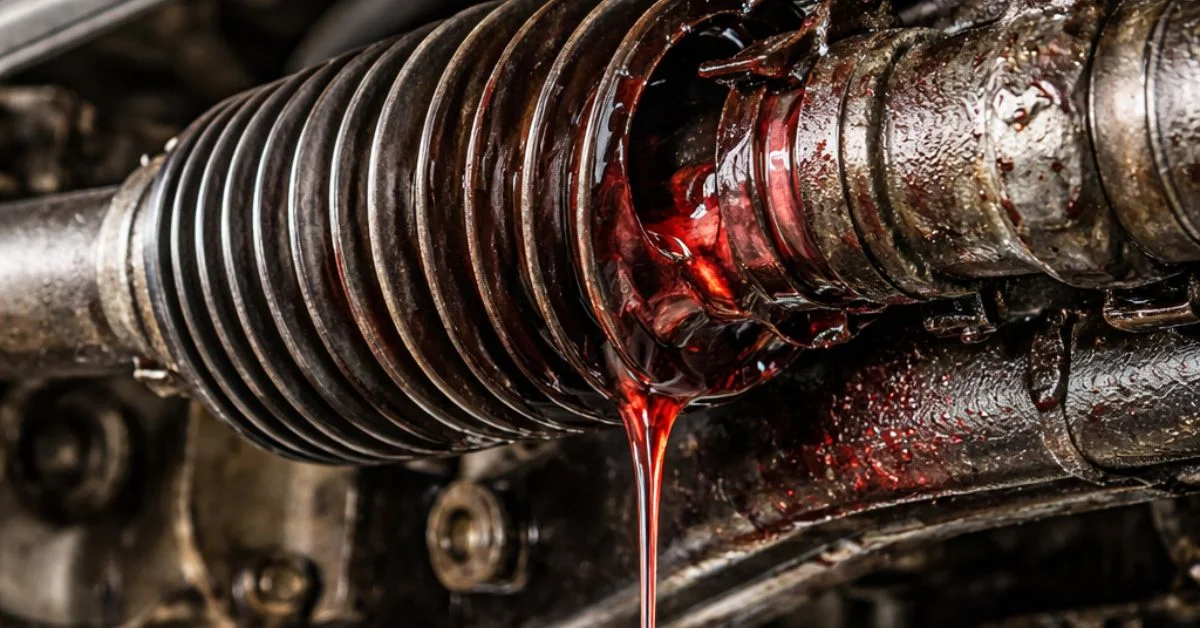
A power steering fluid leak is not always a neat puddle in the driveway. Fluid can collect inside the rubber bellows at the inner tie rod, then drip only after a turn, a bump, or a long highway run. That delay tricks owners into blaming the wrong part. A garage floor spot is evidence, not a verdict.
Color helps, but it is not enough. Fresh hydraulic fluid may look red, amber, or clear depending on the vehicle. Older fluid can turn brown and resemble engine oil. The better clue is location: wetness around the inner tie-rod boot, rack housing, or pinion input area points toward the steering gear instead of the pump. On many front-wheel-drive cars, you may need a light from behind the engine cradle to see the boot area well.
A simple test is to clean the area, top the reservoir to the correct mark, and recheck after a short drive. Do not overfill it. If the boot grows wet again from the inside, the seal is not sweating. It is giving up. That matters because the boot can hold fluid like a small bag, then dump it later and make the leak look sudden.
Heavy steering, groaning noise, and tire wear should be read together
Heavy steering at low speed is the symptom drivers feel first. It shows up while backing out of a tight driveway, turning into a gas station, or making a slow U-turn. Once the fluid drops low, the pump can draw air, and the wheel may shudder or groan as pressure comes and goes. A cold morning can make the problem feel worse because thick fluid exposes weak pressure sooner.
Noise alone can mislead you. A tired pump can whine. A loose belt can squeal. A failing rack can make the wheel feel uneven, as if one part of the turn needs more effort than the rest. That uneven feel deserves attention because steering problems are not comfort issues. NHTSA reminds owners that recalls exist when a vehicle defect creates an unreasonable safety risk or fails minimum safety standards, and steering defects can fall into that safety category. Use the NHTSA recall lookup if symptoms appeared soon after a known steering campaign.
Tire wear is the quiet witness. If fluid has soaked bushings, tie-rod boots are torn, or the rack has play, the alignment can wander. A feathered front tire or off-center wheel does not prove the rack is leaking, but paired with a wet boot and low reservoir, it moves the case from suspicion to likely fault. For related checks, see diagnosing steering wheel vibration. The non-obvious clue is repetition: one odd symptom is a clue, but three small symptoms in the same corner of the car usually tell a story.
Why the Leak Starts Before the Steering Feels Dangerous
A steering leak usually begins long before the wheel feels scary. That gap is the trap. You can drive for weeks with a small seep and think the car is fine, yet the seal lips may already be hard, the fluid may be dirty, and the inner tie-rod area may be bathing in oil. The counterintuitive part is that a small leak can be more expensive than a sudden failure if it convinces you to wait too long. A system that never runs low often survives for years. A system that runs low three times in one month may damage parts that were healthy before the leak began.
How a rack and pinion leak begins inside the seals
A rack and pinion leak often starts at the end seals, where the rack bar slides through the housing each time you steer. The seal has to hold pressure while letting polished metal move through it thousands of times. Dirt, heat, old fluid, and tiny pits on the rack bar all make that job harder. Once the seal lip hardens, pressure finds the easiest path.
TechShop Magazine describes common leak points at the rack ends, the pinion input shaft seal, and the spool valve housing. It also notes that bad leaks can leave the bellows wet when boots are cracked or loose. That matters because the boot is not a fluid seal. It is a dust shield, so oil inside it usually came from a failed internal seal.
The non-obvious lesson is that a new boot does not fix the leak. It may hide the mess for a while. If a shop suggests replacing only a torn boot while fluid is pooled inside, ask whether the inner seal has been checked. A dry outer boot with a soaked inside is like a roof with water trapped in the ceiling. The outside can look fine while the damage keeps spreading.
Why topping off fluid can buy time but cannot fix the cause
Topping off the reservoir is a short-term move, not a repair. It can keep the pump from starving while you arrange an inspection, but it cannot soften a torn seal or polish a damaged rack bar. If the fluid level falls again after a few drives, the system is telling you the leak is active. Mark the level with a photo after the engine cools, then compare it a few days later.
A power steering fluid leak can also become a pump problem. Low fluid creates noise and heat. Heat damages fluid. Damaged fluid makes seals less happy. That loop turns a rack job into a rack-plus-pump job, which is how a repair bill grows without any dramatic breakdown. Many owners do not notice the pump strain until the wheel groans during a tight parking move.
There are seal conditioners and stop-leak products on store shelves. They may slow a minor seep on an old commuter car, but they are a gamble when the leak is near the inner tie rod or the steering feel has changed. Think of them as a delay tactic for a beater, not a plan for a family SUV that sees school runs and interstate speeds. If the wheel effort changes, the repair has moved beyond cosmetics.
Rebuild or Replace: The Decision Comes Down to Wear, Labor, and Risk
Once the leak is confirmed, the debate gets emotional because both choices sound reasonable. Rebuilding feels less wasteful. Replacing feels cleaner. Neither is automatically right. The best choice depends on the condition of the rack bar, parts availability, labor rate, warranty, and how long you plan to keep the car. A ten-year-old Toyota commuter in Phoenix and a rust-belt pickup with crusted lines should not get the same answer. This is where a good diagnosis saves money: the part is only half the story, while labor and repeat failure risk decide whether the repair was smart.
When a rebuild is a smart repair rather than wishful thinking
A rebuild makes sense when the housing is clean, the rack bar is smooth, the leak is limited to seals, and a skilled rebuilder is available. This is common with older enthusiast cars, imports with expensive parts, or vehicles where the original unit is better than many cheap replacements. A good rebuild replaces the wear parts and checks the hard surfaces that caused the leak. It should not be a rinse, reseal, and fresh coat of paint.
The shop matters more than the word “rebuilt.” Some units are resealed with care. Others are cleaned, painted, and moved along. Ask who rebuilds it, what gets replaced, how the unit is pressure-tested, and how warranty claims are handled. A lower price means little if the labor has to be paid twice. The phrase “lifetime warranty” also needs a follow-up question: lifetime on the part, or on the whole installed job?
A rebuild can also preserve steering feel. Drivers of older sports sedans, light trucks, and classic American cars often notice that a poor replacement feels vague. If the original unit has no metal damage, saving it can be the better repair. That surprises people who assume new always means better. In steering, the best part is sometimes the one already matched to the vehicle, as long as it can be repaired correctly.
When the safer choice is a full rack assembly
Replacement becomes the better call when the rack bar is pitted, the housing has internal wear, the vehicle has high mileage, or the unit has been run low on fluid long enough to contaminate the system. In those cases, new seals may fail early because they are rubbing against the same damaged surfaces. Rust belt vehicles add another concern: fittings, lines, and mounting hardware may be too tired to disturb twice.
The steering rack replacement cost should be judged as a total job, not a box price. Labor, alignment, fluid, hoses, tie rods, programming on some newer vehicles, and core charges can change the quote. A remanufactured assembly might look expensive until you compare it with paying labor again after a weak rebuild fails. For a daily driver that needs to be dependable Monday morning, the warranty and installer confidence matter.
A second rack and pinion leak after a recent repair is a warning sign. It may point to a poor unit, but it can also mean the system was never flushed, a hose is shedding debris, or the pump is sending dirty fluid through the replacement. Good shops diagnose the whole hydraulic loop before blaming one part. That extra hour of checking can feel annoying at the counter, but it is cheaper than doing the job twice.
What Owners Should Ask Before Paying the Shop
The quote is only useful if you know what it includes. A line that says “rack” can mean a new original-equipment part, a remanufactured unit, a used salvage part, or a reseal. It may or may not include outer tie rods, alignment, fluid flush, or new lines. The friction in this stage is not only price. It is clarity. Your goal is to make the shop show its logic. A fair shop should be able to explain the repair in plain language without making you feel foolish for asking.
Questions that expose whether the diagnosis is solid
Start with the source. Ask where the leak was seen, whether the bellows were removed or squeezed, and whether the pump, hoses, and reservoir were checked. A wet front end can throw fluid across parts while driving, so the highest wet spot often tells the truth. If everything is coated, the shop may need to clean it and recheck.
Ask whether there is play in the inner tie rods, whether the steering wheel returns to center, and whether the vehicle needs an alignment after the repair. If the answer feels rushed, slow the conversation down. You are not challenging the mechanic. You are protecting the decision. The best technicians know that a clear customer is less likely to be angry later.
One useful request is simple: “Show me the leak.” Many honest shops welcome that. Seeing fluid inside the boot or dripping from the pinion area changes the repair from abstract to clear. It also keeps you from paying for a major job when a pressure hose above the rack is the real culprit. For buyers inspecting a used vehicle, pair this with a pre-purchase suspension inspection checklist. A $150 inspection can save a four-figure surprise.
How to judge the quote beyond the bottom line
The cheapest quote often leaves out the parts that make the repair last. A proper job may include flushing old fluid, replacing damaged tie-rod ends, checking hoses, and aligning the front end. Those items add cost, but they also protect the new or rebuilt assembly. Ask for the quote split into parts, labor, alignment, fluids, and any needed lines.
Compare warranty terms in plain language. Is the warranty on parts only, or parts and labor? Does it cover leaks, noise, hard steering, and premature play? A one-year part warranty sounds fine until you learn that the second alignment and labor would be yours. Ask what happens if the repair leaks after 30 days. The answer tells you more than the brochure.
The steering rack replacement cost also depends on where you live. Labor in Los Angeles, Seattle, or Boston can land far above rates in smaller Midwestern towns. Rust changes the job too. A clean Arizona sedan may come apart quickly, while a Northeast vehicle can turn one hydraulic fitting into an hour of careful heat, patience, and new line work. A high quote is not always a bad quote, but it should explain itself.
Conclusion
A leaking steering unit is not a repair to ignore, but it is also not a reason to approve the first large quote without proof. The smart path is simple: confirm the leak location, check the steering feel, inspect the boots and tie rods, and ask what the repair includes. A power steering rack job should be chosen by condition, not fear. Rebuild when the hard parts are clean, the rebuilder is trusted, and the original unit is worth saving. Replace when wear, contamination, mileage, or warranty risk makes resealing a false bargain. The best owners do one more thing: they fix the cause before it spreads. Low fluid can punish the pump, dirty fluid can harm fresh seals, and a skipped alignment can eat tires after the repair. A clear quote and a clean test drive matter as much as the part number. Get the evidence, compare the real scope of work, and choose the repair that protects the steering, not the one that only quiets the drip.
Frequently Asked Questions
How do I know if my steering rack is leaking or the hose is leaking?
Clean the wet area first, then recheck after a short drive. Fluid that returns inside the inner tie-rod boot or around the rack housing points to the rack. Fluid starting higher near a crimped line, pump, or reservoir often points to a hose.
Is it safe to drive with a small steering fluid leak?
A short local drive may be possible if the reservoir stays full and steering feels normal. It is still risky to delay. Low fluid can make the wheel heavy at low speed and can damage the pump, turning one repair into two.
Can stop leak fix a rack and pinion leak?
It may slow a minor seep for a while, but it does not repair torn seals, worn metal, or internal rack damage. Use it only as a temporary measure on an older low-value vehicle, and avoid it when steering feel has changed.
How much does rack repair usually cost in the United States?
Costs vary by vehicle, labor rate, part choice, and rust. A simple reman unit on a common sedan can be far cheaper than an original-equipment unit on a truck or luxury car. Always compare parts, labor, alignment, fluid, and warranty together.
Should I rebuild or replace a leaking steering rack?
Rebuild it when the rack bar is smooth, the housing is sound, and the rebuilder has a strong warranty. Replace it when the unit has heavy wear, pitting, contamination, poor steering feel, or a history of running low on fluid.
Will a leaking rack cause uneven tire wear?
Yes, it can contribute to uneven wear if the rack has play, tie rods are worn, or the alignment shifts after parts become loose. A leak alone may not scrub tires, but leaking plus looseness often shows up as feathering or edge wear.
Do I need an alignment after replacing the steering rack?
Yes, an alignment is normally needed because the rack and tie rods affect toe angle. Skipping it can leave the steering wheel off-center and wear the front tires. Ask whether alignment is included before approving the repair.
What happens if the fluid runs out completely?
Steering assist can drop, especially at parking speeds, and the pump may overheat or fail from lack of lubrication. You may still be able to steer, but it can take far more effort. Stop driving and arrange repair if the wheel becomes hard to turn.